
Rhamphorhynchus
Rhamphorhynchus muensteri • "Beak Snout"
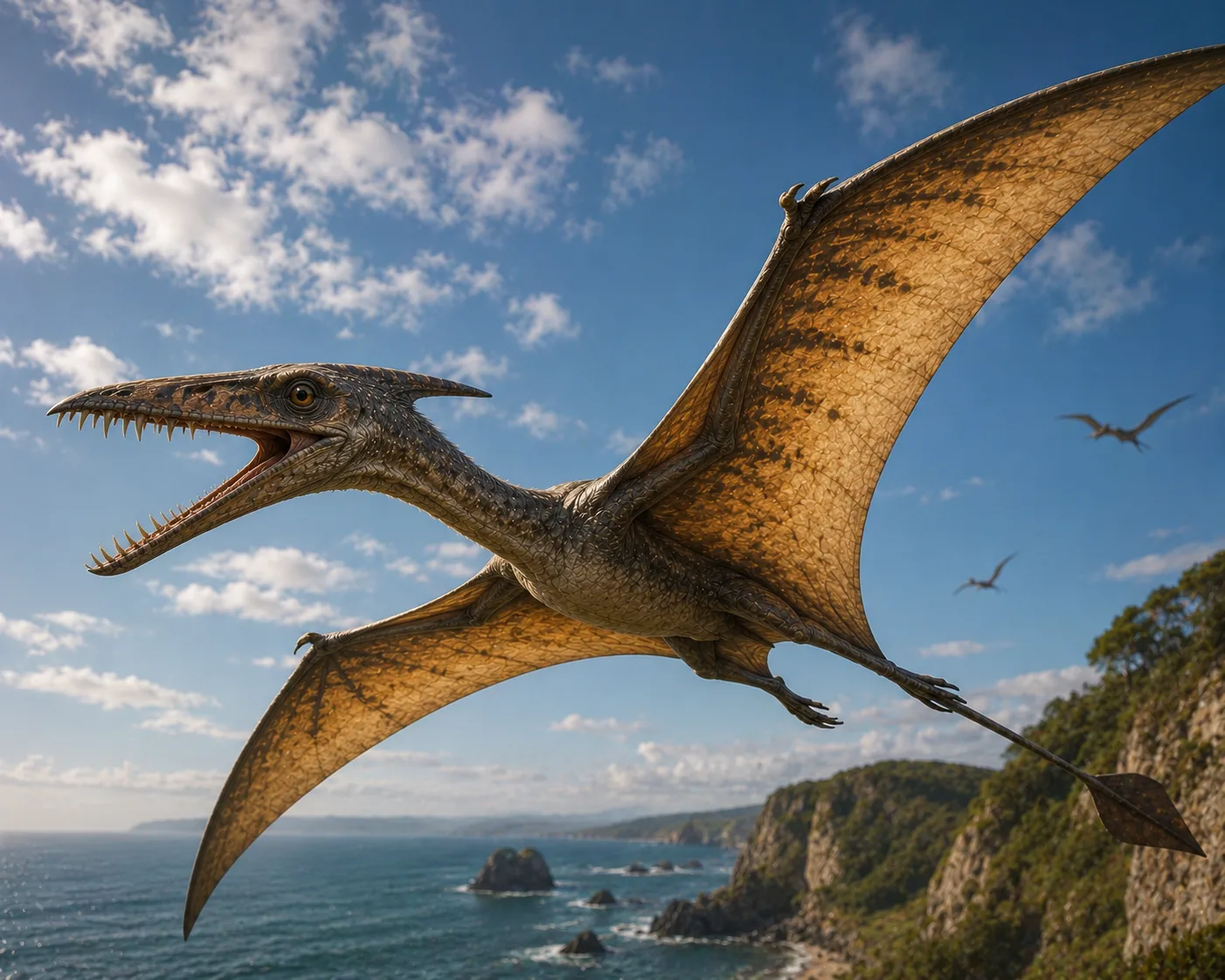
Rhamphorhynchus was a long-tailed pterosaur from the Late Jurassic. Fossils from the Solnhofen limestone of Bavaria preserve delicate details that are rarely kept in the fossil record, including parts of the wing membrane and tail vane.
- Length
- ≈1.2 m
- Weight
- ≈0.0 t
- Diet
- Piscivore
- Danger
- ★★★★★
Overview
Rhamphorhynchus was a long-tailed pterosaur from the Late Jurassic. Fossils from the Solnhofen limestone of Bavaria preserve delicate details that are rarely kept in the fossil record, including parts of the wing membrane and tail vane.
“A particularly large Rhamphorhynchus specimen described by the Natural History Museum has a wingspan of about 1.8 metres.”
Key facts
Strengths
- Adapted to its prehistoric environment
Weaknesses
- Limited fossil evidence for detailed behavior
Natural weapons
- Natural jaws, teeth, or defensive anatomy
Movies vs. science
Myth: Popular media often simplifies prehistoric animal behavior.
Reality: Fossils provide the strongest evidence for anatomy and ecology.
Size & simulator stats
A wingspan around 1.8 m is reported for a large specimen; size varied among individuals.
- Length
- 1.2 m
- Height
- 0.3 m
- Weight
- 0.0 t
Illustrative simulator values (not measured biology)
See how Rhamphorhynchus measures up in the sourced size comparison chart.
Habitat
Late Jurassic lagoons and coastal settings represented by the Solnhofen limestone of present-day Germany.
Present-day southern Germany; many fossils come from the Solnhofen limestone.
Diet
Its long jaws and teeth are consistent with catching slippery prey such as fish, though diet could vary among pterosaurs.
Likely ate fish and other small aquatic prey, inferred from its jaws and teeth.
Fossils & discovery
First described from Fossil record (Multiple fossil formations).A particularly large Rhamphorhynchus specimen described by the Natural History Museum has a wingspan of about 1.8 metres.
Research sources
Sources checked on by the Dinosaurs Names Editorial Team. Editorial policy
Gallery
Related dinosaurs
Battle Arena
Can anything beat Rhamphorhynchus?
Send Rhamphorhynchus into an illustrative matchup against any other species and compare attack, defense, and bite force.
Fight as Rhamphorhynchus