
Pteranodon
Pteranodon longiceps • "Wing Without Teeth"
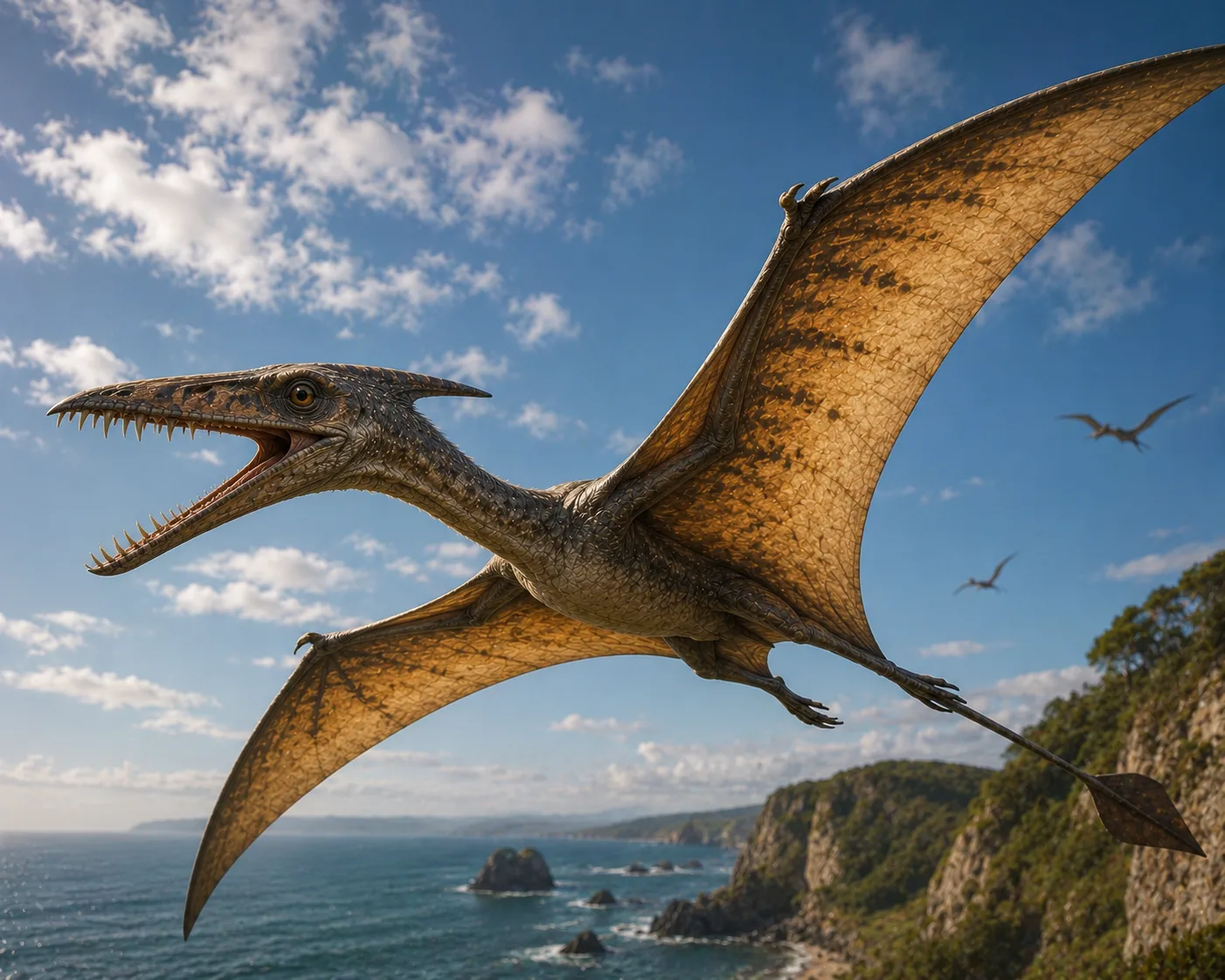
Pteranodon was a large, toothless pterosaur that lived near the Western Interior Seaway in Late Cretaceous North America. Pterosaurs were flying reptiles, not dinosaurs. Its long wing finger supported a membrane wing.
- Length
- ≈6 m
- Weight
- ≈0.0 t
- Diet
- Piscivore
- Danger
- ★★★★★
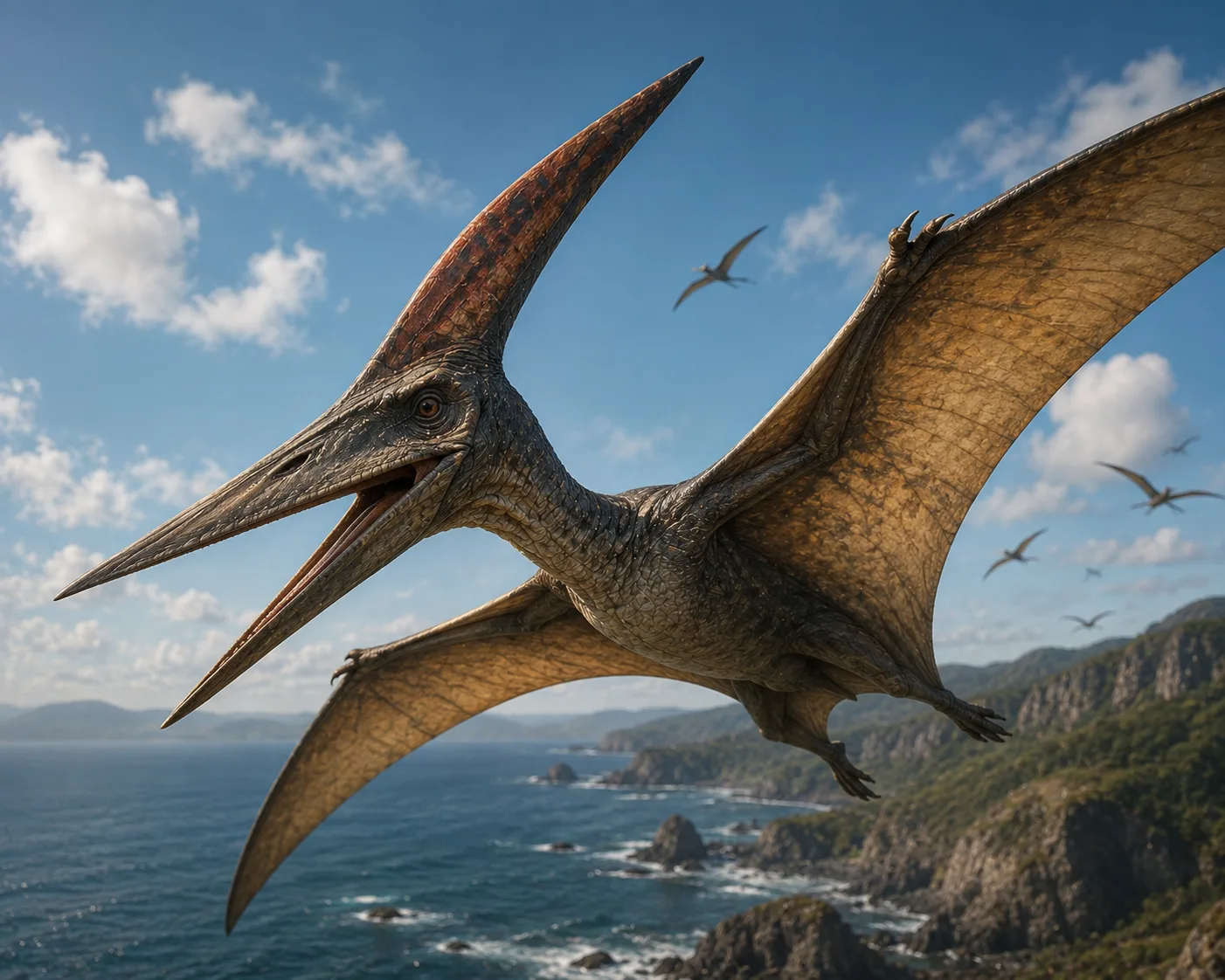
Overview
Pteranodon was a large, toothless pterosaur that lived near the Western Interior Seaway in Late Cretaceous North America. Pterosaurs were flying reptiles, not dinosaurs. Its long wing finger supported a membrane wing.
“Some Pteranodon specimens preserve fish remains in the stomach area, supporting the idea that it fed on fish.”
Key facts
Strengths
- Adapted to its prehistoric environment
Weaknesses
- Limited fossil evidence for detailed behavior
Natural weapons
- Natural jaws, teeth, or defensive anatomy
Movies vs. science
Myth: Popular media often simplifies prehistoric animal behavior.
Reality: Fossils provide the strongest evidence for anatomy and ecology.
Size & simulator stats
Some males had an estimated wingspan of about 6 m; females were generally smaller. Wingspan estimates vary among fossils.
- Length
- 6 m
- Height
- 2 m
- Weight
- 0.0 t
Illustrative simulator values (not measured biology)
See how Pteranodon measures up in the sourced size comparison chart.
Habitat
Coastal environments around the Late Cretaceous Western Interior Seaway; many fossils are from Kansas.
Coastal areas around the Western Interior Seaway in North America; many fossils come from Kansas.
Diet
Likely caught fish at the water surface. Its toothless beak distinguishes it from many other pterosaurs.
Likely ate fish and other marine prey. Pteranodon was toothless, and fossils are associated with marine deposits.
Fossils & discovery
First described from Fossil record (Multiple fossil formations).Some Pteranodon specimens preserve fish remains in the stomach area, supporting the idea that it fed on fish.
Research sources
Sources checked on by the Dinosaurs Names Editorial Team. Editorial policy
Gallery
Related dinosaurs
Battle Arena
Can anything beat Pteranodon?
Send Pteranodon into an illustrative matchup against any other species and compare attack, defense, and bite force.
Fight as Pteranodon