
Diplodocus
Diplodocus • "Double Beam"
Diplodocus was a long-necked, plant-eating sauropod from Late Jurassic North America. Its name refers to the distinctive double-beamed bones on the underside of its tail. Fossils are known from the Morrison Formation, alongside other famous Jurassic dinosaurs.
- Length
- ≈27 m
- Weight
- ≈15.0 t
- Diet
- Herbivore
- Danger
- ★★★★★
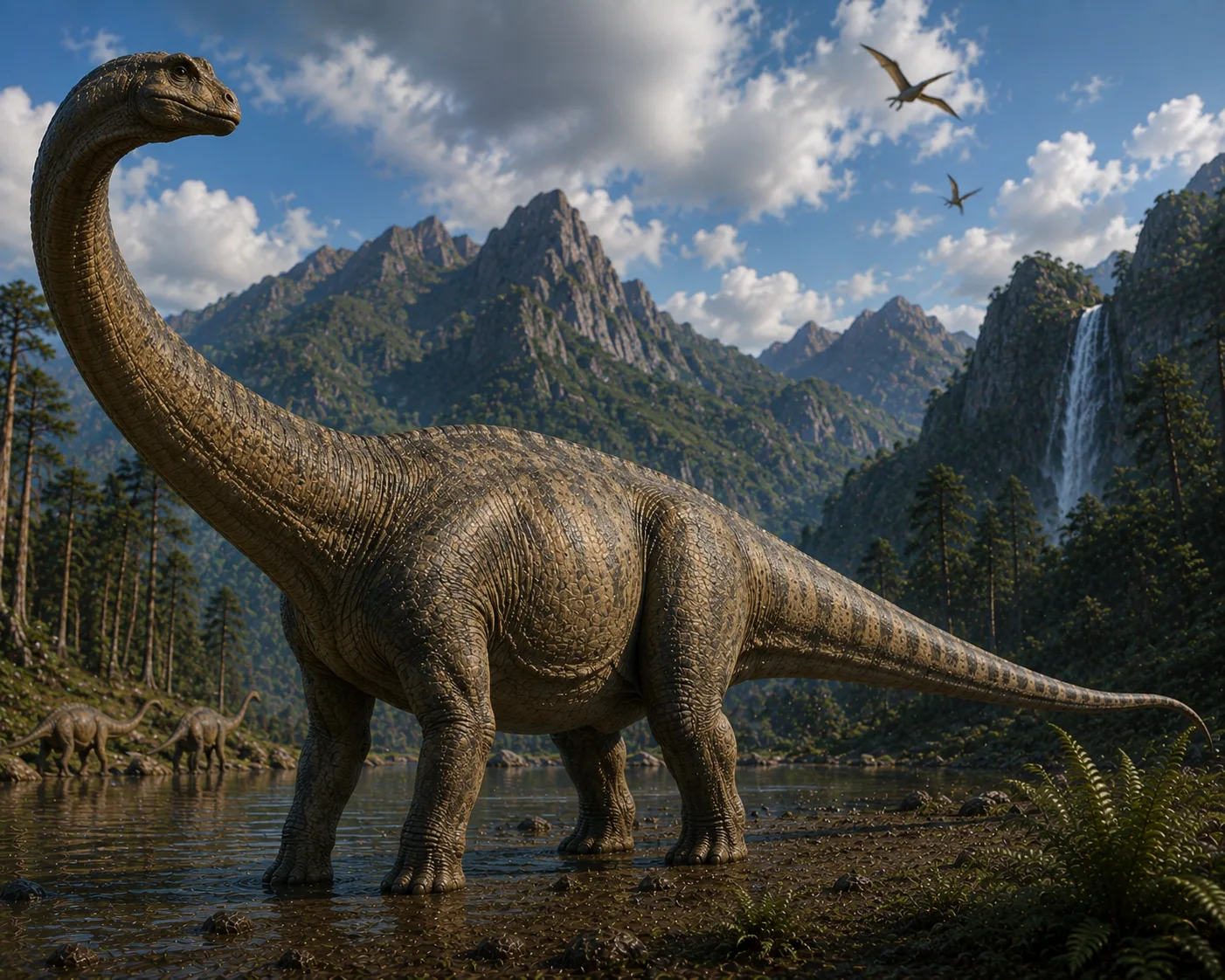
Overview
Diplodocus was a long-necked, plant-eating sauropod from Late Jurassic North America. Its name refers to the distinctive double-beamed bones on the underside of its tail. Fossils are known from the Morrison Formation, alongside other famous Jurassic dinosaurs.
“The double-beamed tail bones that inspired its name were first thought to be unique to Diplodocus; later discoveries found similar bones in other sauropods.”
Key facts
Strengths
- Adapted to its prehistoric environment
Weaknesses
- Limited fossil evidence for detailed behavior
Natural weapons
- Natural jaws, teeth, or defensive anatomy
Movies vs. science
Myth: Popular media often simplifies prehistoric animal behavior.
Reality: Fossils provide the strongest evidence for anatomy and ecology.
Size & simulator stats
Estimated at about 26 m long. It was among the longest dinosaurs, though comparisons depend on which species and reconstructions are used.
- Length
- 27 m
- Height
- 5 m
- Weight
- 15.0 t
Illustrative simulator values (not measured biology)
See how Diplodocus measures up in the sourced size comparison chart.
Habitat
Late Jurassic floodplains of what is now the western United States; fossils occur in the Morrison Formation.
Western North America; many fossils come from the Morrison Formation of the United States.
Diet
A herbivore with comb-like teeth suited to stripping soft vegetation. The exact height at which it fed is still debated.
Herbivore. Its peg-like teeth were suited to stripping vegetation; the exact plants and feeding heights are uncertain.
Fossils & discovery
First described from Fossil record (Multiple fossil formations).The double-beamed tail bones that inspired its name were first thought to be unique to Diplodocus; later discoveries found similar bones in other sauropods.
Research sources
Sources checked on by the Dinosaurs Names Editorial Team. Editorial policy
Gallery
Related dinosaurs
Battle Arena
Can anything beat Diplodocus?
Send Diplodocus into an illustrative matchup against any other species and compare attack, defense, and bite force.
Fight as Diplodocus