
Paraceratherium
Paraceratherium transouralicum • "Near Horned Beast"
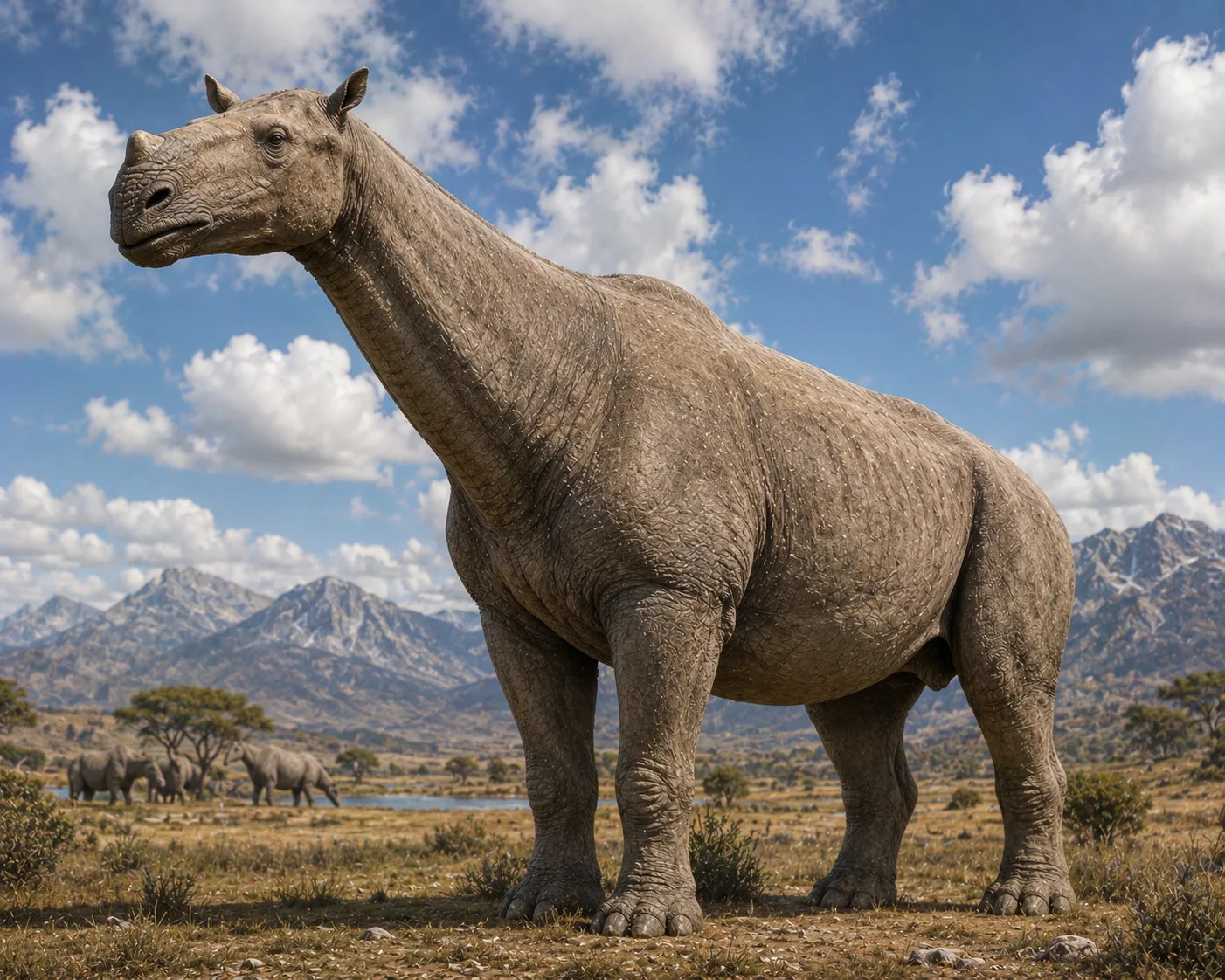
Paraceratherium was a hornless relative of modern rhinos that lived in Central Asia during the Oligocene. It is often described as one of the largest land mammals, but its body is reconstructed from incomplete fossils, so exact size comparisons are uncertain.
- Length
- ≈8 m
- Weight
- ≈15.0 t
- Diet
- Herbivore
- Danger
- ★★★★★
Overview
Paraceratherium was a hornless relative of modern rhinos that lived in Central Asia during the Oligocene. It is often described as one of the largest land mammals, but its body is reconstructed from incomplete fossils, so exact size comparisons are uncertain.
“The American Museum of Natural History describes Paraceratherium as a plant-eating giant; several historical names have been used for related fossil material.”
Key facts
Strengths
- Adapted to its prehistoric environment
Weaknesses
- Limited fossil evidence for detailed behavior
Natural weapons
- Natural jaws, teeth, or defensive anatomy
Movies vs. science
Myth: Popular media often simplifies prehistoric animal behavior.
Reality: Fossils provide the strongest evidence for anatomy and ecology.
Size & simulator stats
Reconstructions suggest about 7 m long and around 4.5 m at the shoulder, with mass estimates often in the 10–20 tonne range. The fossil record is incomplete and estimates vary.
- Length
- 8 m
- Height
- 7 m
- Weight
- 15.0 t
Illustrative simulator values (not measured biology)
See how Paraceratherium measures up in the sourced size comparison chart.
Habitat
Oligocene Central Asia, known from fossil deposits across the region.
Central and southern Asia; fossils come from several regions and formations.
Diet
A plant-eating browser. Its long neck and limbs are consistent with reaching vegetation above the ground.
Herbivore, probably browsing on leaves and other vegetation.
Fossils & discovery
First described from Fossil record (Multiple fossil formations).The American Museum of Natural History describes Paraceratherium as a plant-eating giant; several historical names have been used for related fossil material.
Research sources
- Natural History Museum: Why were dinosaurs so big? (Paraceratherium size)
- American Museum of Natural History: Oligocene mammals
- American Museum of Natural History: Hyracodontidae
Sources checked on by the Dinosaurs Names Editorial Team. Editorial policy
Gallery
Related dinosaurs
Battle Arena
Can anything beat Paraceratherium?
Send Paraceratherium into an illustrative matchup against any other species and compare attack, defense, and bite force.
Fight as Paraceratherium