
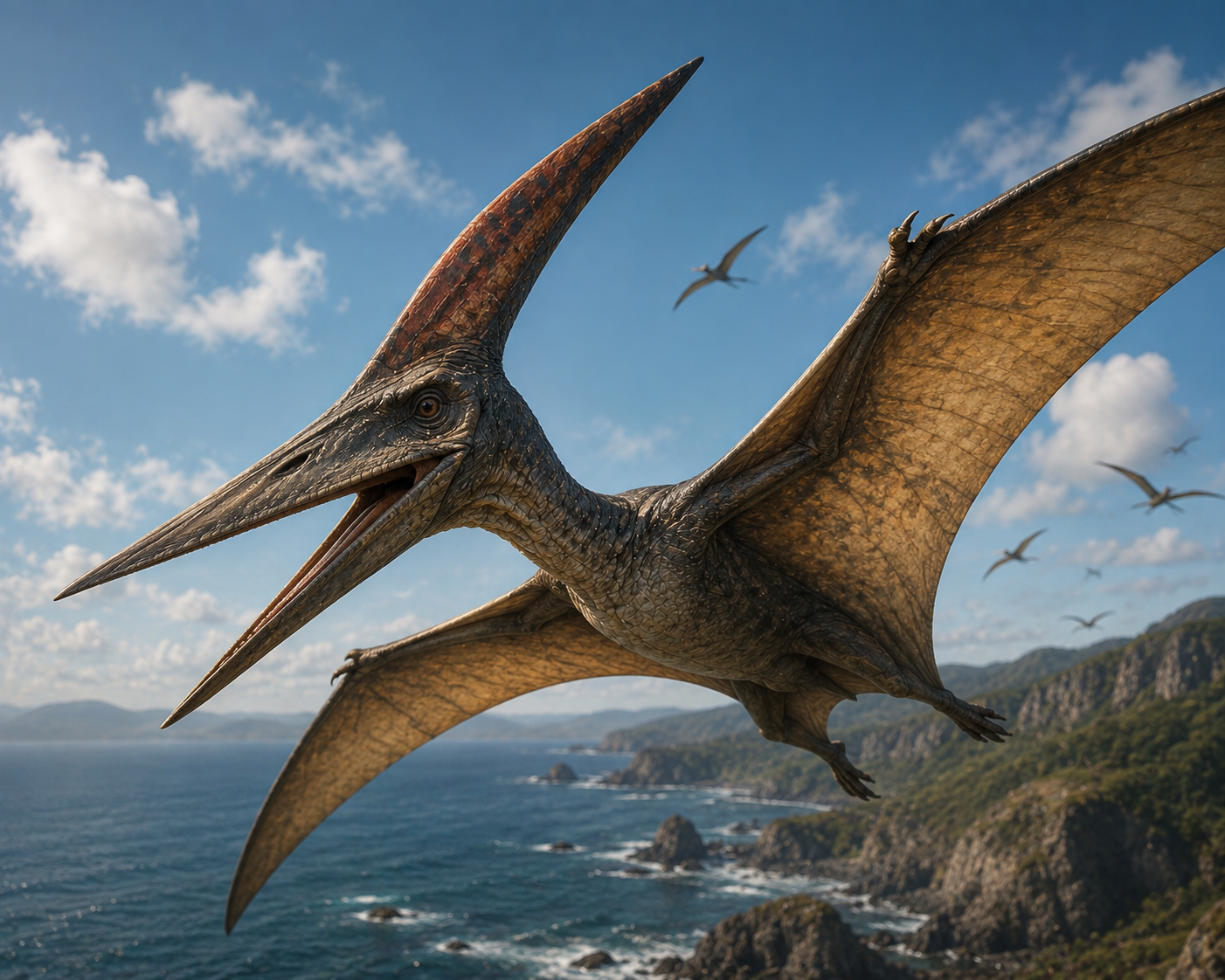
Quetzalcoatlus
Quetzalcoatlus northropi
Paleobiological Overview & Profile
The largest flying creature in Earth’s history. With an 11-meter wingspan and standing as tall as a modern giraffe, Quetzalcoatlus stalked Cretaceous floodplains like a giant prehistoric stork, spearing small dinosaurs whole.
Biomechanical computer models prove Quetzalcoatlus launched into flight using a quadruple vault, pushing off the ground with both front wings to leap into the air in a split second.
True Biological Size Comparison
Anatomical Weapon Systems
Specialized biomechanical adaptations evolved for predatory dominance and defensive survival.
Long, toothless, sharply pointed beak made of rigid bone and keratin.
Hyper-developed forelimb wing bones anchored to colossal pectoral muscles.
Elongated cervical vertebrae providing stability during terrestrial stalking.
Complete Weapon Systems:
- ✓2.5-meter razor-sharp spear-like toothless beak
- ✓11-meter wingspan generating high-altitude dive-bombs
- ✓Giraffe-sized terrestrial stalking stance
Tactical Combat Playbook
Predatory strategies and survival mechanics against varying classes of prehistoric opponents.
Uses aerial dive-bombs to strike eyes and head, retreating to the sky before retaliation.
Bypasses armor by spearing vulnerable unarmored eyes or joints.
High-altitude thermal soaring to spot prey before executing a precision dive.
Key Biological Advantages
- +Highest flight altitude and aerial mobility of any prehistoric animal
- +Precision spear-like beak strike capable of piercing skulls
- +Terrifying land-stalking height (stood as tall as a giraffe)
Tactical Weaknesses
- -Hollow lightweight bone structure vulnerable to heavy blunt impacts
- -Delicate wing membranes susceptible to tearing
Pop-Culture Myth vs. Scientific Evidence
"Shown nesting on oceanic cliffs like a seabird."
Lived hundreds of miles inland in river basins, stalking terrestrial prey on foot.
Combat Rating Index
Habitat & Diet Specialization
Inland river basins, semi-arid floodplains, and open woodland savannas.
Hunted juvenile sauropods, small theropods, mammals, lizards, and carcasses.
Discovery Provenance
- Fossil Localities
- United States
- First Excavation
- 1971 AD
- Primary Formation
- Javelina Formation (Big Bend National Park, Texas)
- Geological Epoch
- Late Cretaceous