
Plesiosaurus
Plesiosaurus dolichodeirus • "Near Lizard"
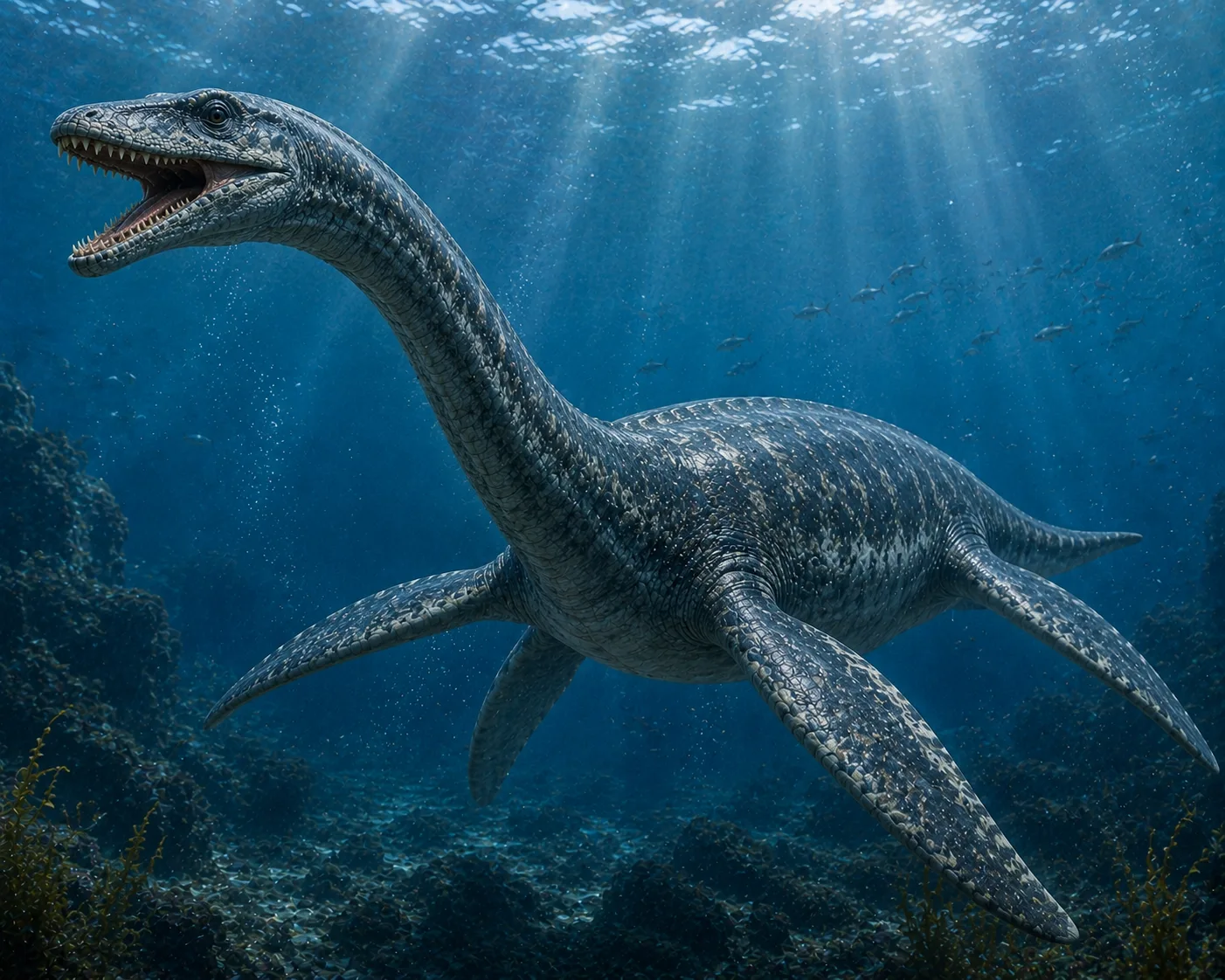
Plesiosaurus was an Early Jurassic marine reptile. It was not a dinosaur: plesiosaurs lived in the oceans and were a separate reptile group. Four flippers propelled its body through water, while its teeth suggest it caught relatively small prey.
- Length
- ≈4.5 m
- Weight
- ≈0.5 t
- Diet
- Piscivore
- Danger
- ★★★★★
Overview
Plesiosaurus was an Early Jurassic marine reptile. It was not a dinosaur: plesiosaurs lived in the oceans and were a separate reptile group. Four flippers propelled its body through water, while its teeth suggest it caught relatively small prey.
“Mary Anning discovered the first nearly complete Plesiosaurus skeleton in 1823 on the Dorset coast, helping reveal the animal’s distinctive body plan.”
Key facts
Strengths
- Adapted to its prehistoric environment
Weaknesses
- Limited fossil evidence for detailed behavior
Natural weapons
- Natural jaws, teeth, or defensive anatomy
Movies vs. science
Myth: Popular media often simplifies prehistoric animal behavior.
Reality: Fossils provide the strongest evidence for anatomy and ecology.
Size & simulator stats
The best-known species, Plesiosaurus dolichodeirus, was about 3.5 m long.
- Length
- 4.5 m
- Height
- 1.5 m
- Weight
- 0.5 t
Illustrative simulator values (not measured biology)
See how Plesiosaurus measures up in the sourced size comparison chart.
Habitat
Early Jurassic seas. Well-known fossils come from the Dorset coast of southern England.
Shallow seas; classic fossils come from the Dorset coast of southern England.
Diet
The skull and teeth indicate prey such as fish and crustaceans.
Carnivore, likely feeding on small fish and other marine animals. Diet is inferred from skull and teeth.
Fossils & discovery
First described from Fossil record (Multiple fossil formations).Mary Anning discovered the first nearly complete Plesiosaurus skeleton in 1823 on the Dorset coast, helping reveal the animal’s distinctive body plan.
Research sources
Sources checked on by the Dinosaurs Names Editorial Team. Editorial policy
Gallery
Related dinosaurs
Battle Arena
Can anything beat Plesiosaurus?
Send Plesiosaurus into an illustrative matchup against any other species and compare attack, defense, and bite force.
Fight as Plesiosaurus