
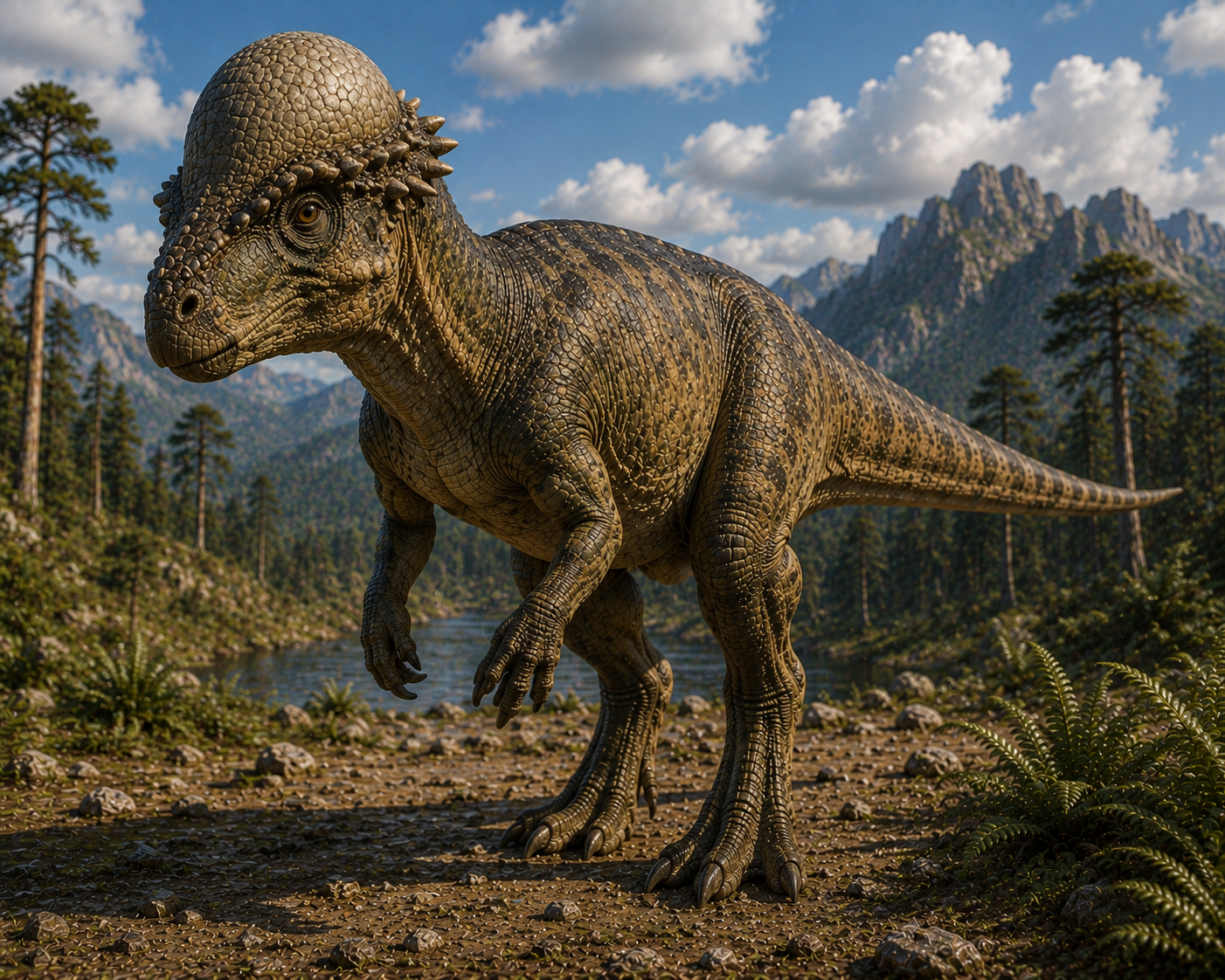
Pachycephalosaurus
Pachycephalosaurus wyomingensis
Paleobiological Overview & Profile
The heavyweight boxer of the prehistoric plains. Pachycephalosaurus wielded a solid 10-inch-thick bone dome capable of smashing into rivals during mating season and bludgeoning predators in defense.
Studies by Jack Horner demonstrate that Dracorex and Stygimoloch are actually juvenile and sub-adult growth stages of Pachycephalosaurus, showing how the dome thickened with age.
True Biological Size Comparison
Anatomical Weapon Systems
Specialized biomechanical adaptations evolved for predatory dominance and defensive survival.
Massive frontoparietal dome composed of dense fibrolamellar bone.
Thickened neck bones oriented in an S-curve to disperse impact force.
Rigid tail providing a stable three-point stance during charging.
Complete Weapon Systems:
- ✓Solid 25-centimeter (10-inch) thick bone skull dome
- ✓Bony spikes and knobs ringing the snout and back of skull
- ✓Reinforced rigid spinal column to absorb head-on collisions
Tactical Combat Playbook
Predatory strategies and survival mechanics against varying classes of prehistoric opponents.
Ducks under high bites and rams its 10-inch bone dome directly into the predator’s knee or ankle joint.
Engages in ritualized flank-butting dominance contests.
Uses bipedal agility to deliver rapid concussive charges.
Key Biological Advantages
- +Lethal battering-ram head strikes that break ribs and bone
- +High agility and bipedal speed (sprints at 35 km/h)
- +Shock-absorbing neck vertebrae and rigid torso
Tactical Weaknesses
- -Light body mass compared to apex theropods (450 kg vs 8000 kg)
- -Limited offensive reach beyond direct head contact
Pop-Culture Myth vs. Scientific Evidence
"Shown ramming solid iron cages and car doors without injury."
The dome was dense and vascular, used for flank-butting and head-to-head dominance clashes with shock absorption.
Combat Rating Index
Habitat & Diet Specialization
Floodplain forests, open grasslands, and riverbanks of Cretaceous North America.
Herbivore/omnivore consuming seeds, roots, fruits, leaves, and occasional insects.
Discovery Provenance
- Fossil Localities
- United States
- First Excavation
- 1940 AD
- Primary Formation
- Hell Creek Formation (Montana, South Dakota, Wyoming)
- Geological Epoch
- Late Cretaceous