
Megalodon
Otodus megalodon • "Big Tooth"
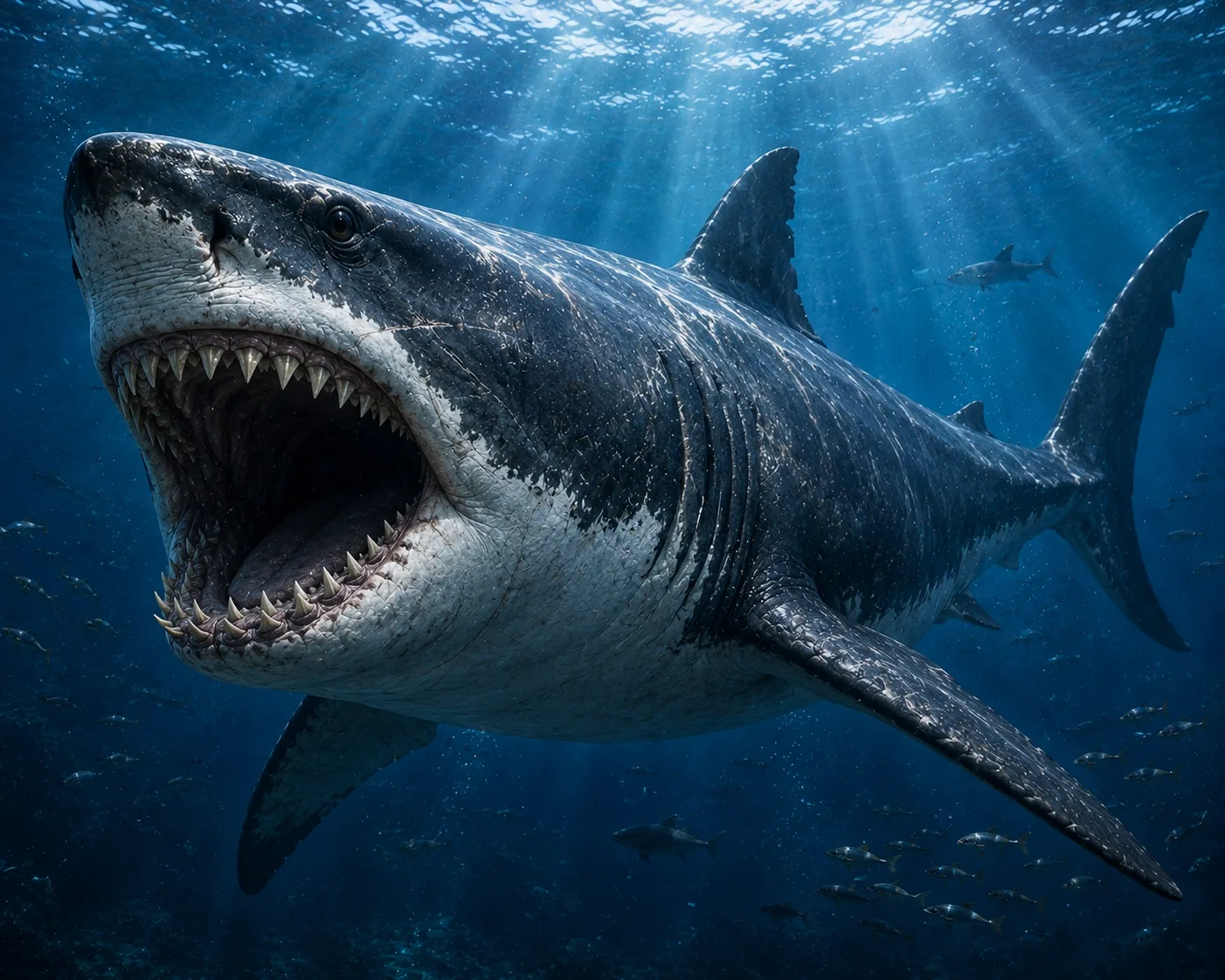
Otodus megalodon was an extinct shark, not a marine reptile. It lived from about 23 million years ago until at least 3.6 million years ago. Most fossils are teeth because shark skeletons are largely cartilage; a 2025 study proposed a maximum length of 24.3 metres using vertebral fossils, while earlier tooth-based estimates were lower.
- Length
- ≈18 m
- Weight
- ≈50.0 t
- Diet
- Carnivore
- Danger
- ★★★★★
Overview
Otodus megalodon was an extinct shark, not a marine reptile. It lived from about 23 million years ago until at least 3.6 million years ago. Most fossils are teeth because shark skeletons are largely cartilage; a 2025 study proposed a maximum length of 24.3 metres using vertebral fossils, while earlier tooth-based estimates were lower.
“Megalodon teeth can reach about 18 centimetres long. A 2025 study using vertebral fossils proposed a larger body-size estimate than earlier tooth-based calculations.”
Key facts
Strengths
- Adapted to its prehistoric environment
Weaknesses
- Limited fossil evidence for detailed behavior
Natural weapons
- Natural jaws, teeth, or defensive anatomy
Movies vs. science
Myth: Popular media often simplifies prehistoric animal behavior.
Reality: Fossils provide the strongest evidence for anatomy and ecology.
Size & simulator stats
A 2025 vertebra-based study proposed up to 24.3 m. Earlier tooth-based estimates were about 15–18 m; no complete skeleton is known, so maximum size remains debated.
- Length
- 18 m
- Height
- 3 m
- Weight
- 50.0 t
Illustrative simulator values (not measured biology)
See how Megalodon measures up in the sourced size comparison chart.
Habitat
Warm marine waters around the world during the Miocene and Pliocene.
Warm tropical and subtropical seas around the world; fossils occur on every continent except Antarctica.
Diet
A large predatory shark. Tooth marks on fossil marine mammals provide evidence of feeding, though prey and hunting behavior varied.
Carnivore. Fossil bite marks and teeth indicate it ate large fish, sharks, and marine mammals, including whales.
Fossils & discovery
First described from Fossil record (Multiple fossil formations).Megalodon teeth can reach about 18 centimetres long. A 2025 study using vertebral fossils proposed a larger body-size estimate than earlier tooth-based calculations.
Research sources
- Shimada et al. (2025): Megalodon body size and form, Palaeontologia Electronica
- Natural History Museum: Megalodon size estimates
Sources checked on by the Dinosaurs Names Editorial Team. Editorial policy
Gallery
Battle Arena
Can anything beat Megalodon?
Send Megalodon into an illustrative matchup against any other species and compare attack, defense, and bite force.
Fight as Megalodon