
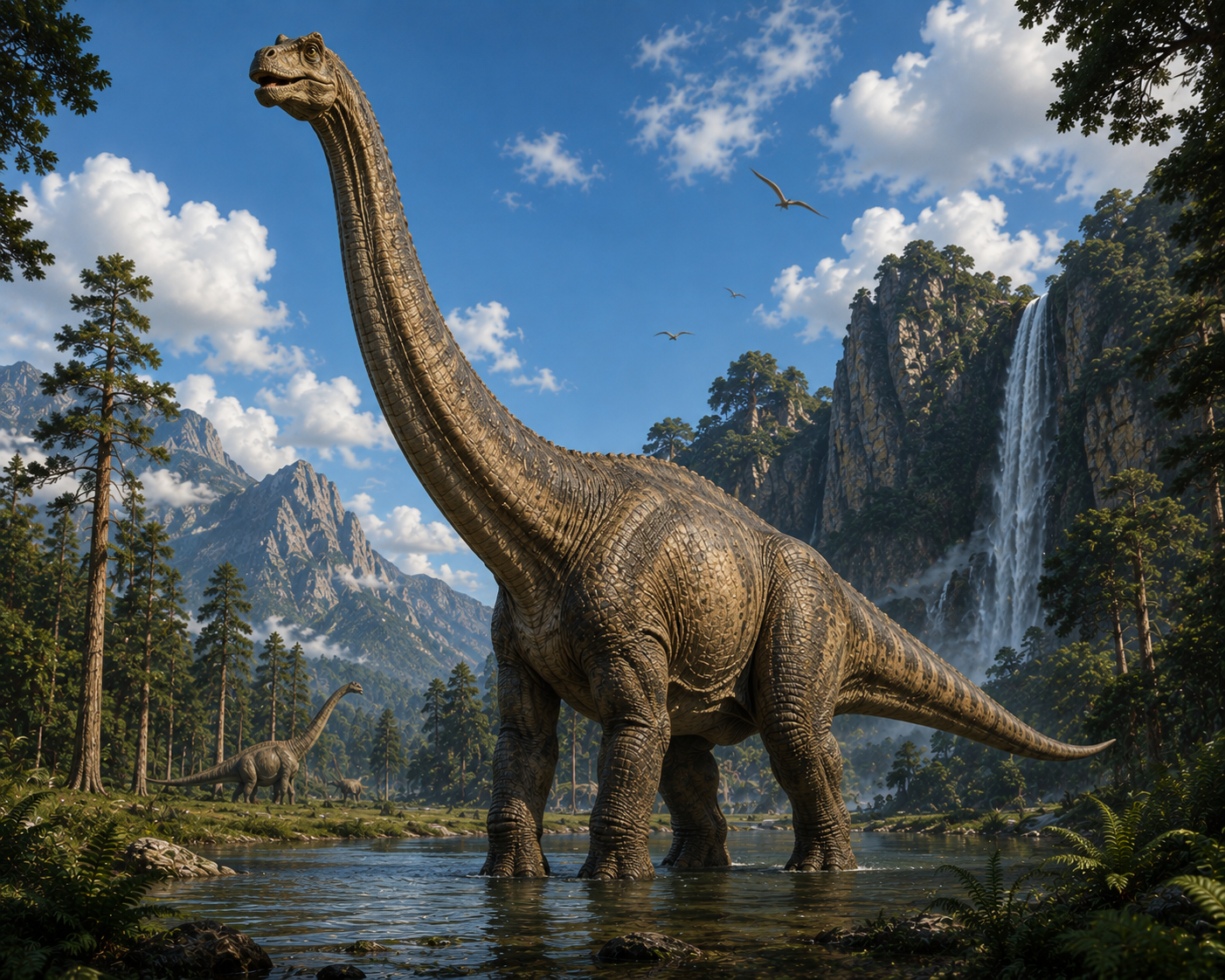
Brachiosaurus
Brachiosaurus altithorax
Paleobiological Overview & Profile
One of the tallest and most iconic sauropods of the Jurassic. Unlike most other long-necked dinosaurs, its front legs were longer than its hind legs, giving it a majestic giraffe-like posture to browse high Jurassic conifer trees 13 meters above the forest floor.
Brachiosaurus had a heart estimated to weigh over 200 kg (440 lbs) in order to generate the massive blood pressure required to pump blood up its 9-meter vertical neck.
True Biological Size Comparison
Anatomical Weapon Systems
Specialized biomechanical adaptations evolved for predatory dominance and defensive survival.
Front limbs longer than hind limbs, elevating the shoulder girdle and neck base.
Robust spoon-shaped teeth adapted for stripping tough fibrous conifer branches.
Neck vertebrae hollowed by internal air sacs connected to the respiratory system.
Complete Weapon Systems:
- ✓45-tonne kinetic stomp force capable of pulverizing any predator
- ✓Massive tree-trunk front forelimbs with heavy thumb claws
- ✓High-altitude vantage point 13 meters above ground level
- ✓Heavy muscular tail capable of sweeping away medium theropods
Tactical Combat Playbook
Predatory strategies and survival mechanics against varying classes of prehistoric opponents.
Rears front feet slightly and slams 45 tonnes of weight directly down onto attacking carnivores.
Ignores ground-level competition, utilizing size to claim feeding territory.
Ground-vibrating stomps and sweeping tail movements that create fatal crush zones.
Key Biological Advantages
- +Colossal physical mass (45 metric tonnes) makes it virtually immune to solo predators
- +Can trample apex theropods effortlessly beneath its colossal front feet
- +Monopolizes high-canopy conifer foliage out of reach of all other herbivores
Tactical Weaknesses
- -Slow locomotion sprint speed (cannot chase or evade quickly)
- -Enormous caloric intake required (consumed hundreds of kilograms of foliage daily)
- -Large turning radius in confined spaces
Pop-Culture Myth vs. Scientific Evidence
"Often shown rearing up on its hind legs to reach even higher branches."
Its center of mass was located over its front legs, making rearing structurally impossible and unnecessary given its 13m height.
Combat Rating Index
Habitat & Diet Specialization
Lush semi-arid floodplain forests and river valleys dominated by colossal conifer trees, ginkgoes, and cycads.
High-browser feeding on pine cones, conifer needles, ginkgo leaves, and tree ferns with spoon-shaped chisel teeth.
Discovery Provenance
- Fossil Localities
- United States & Tanzania
- First Excavation
- 1900 AD
- Primary Formation
- Morrison Formation (Grand River Valley, Colorado)
- Geological Epoch
- Late Jurassic