
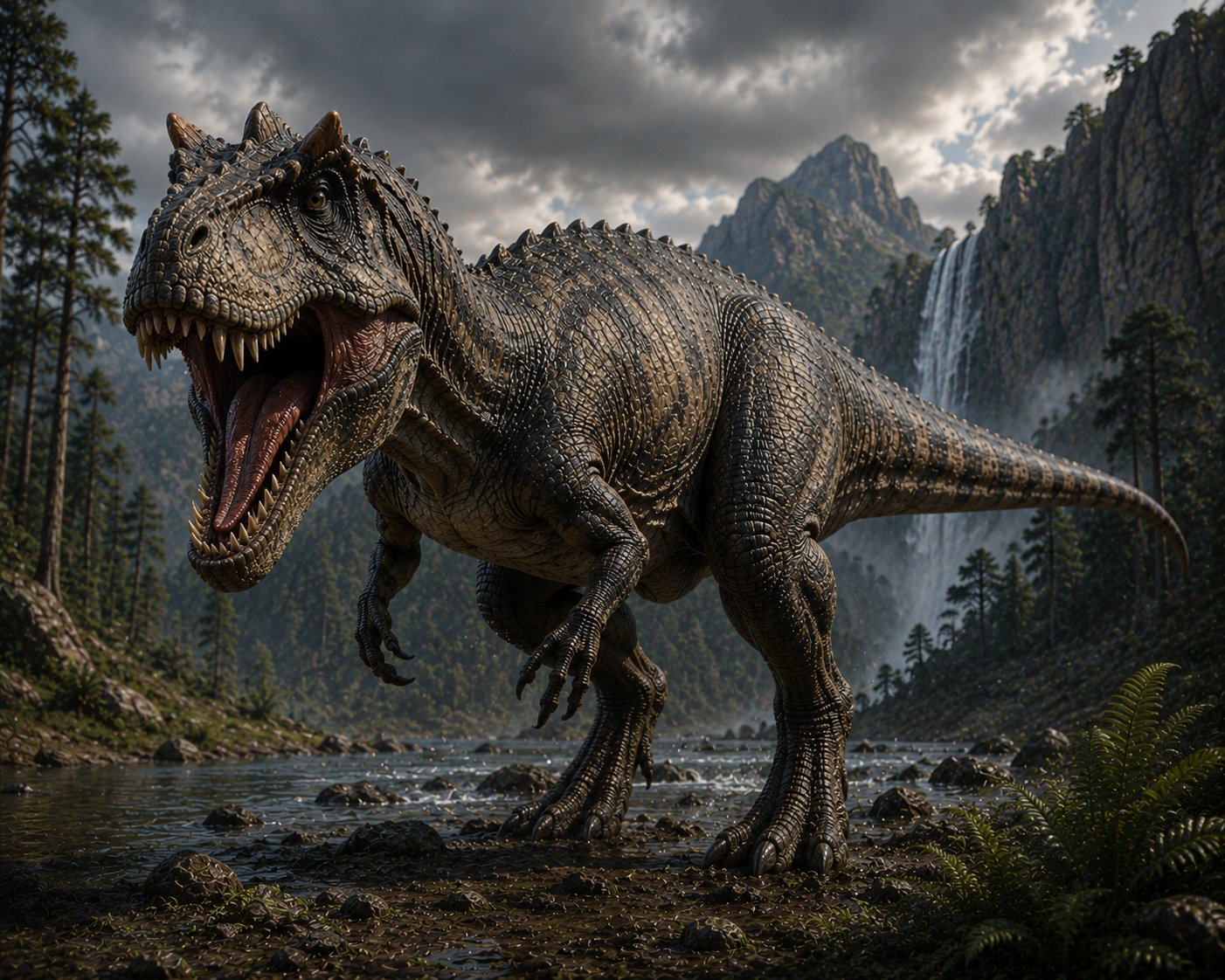
Allosaurus
Allosaurus fragilis
Paleobiological Overview & Profile
The lion of the Jurassic period. Allosaurus was the top apex predator of its ecosystem, using its upper skull like a surgical battleaxe to slash deep wounds into Stegosaurus and massive sauropods.
Over 12,000 Allosaurus bones have been recovered from the Cleveland-Lloyd Dinosaur Quarry in Utah alone, suggesting they may have hunted in packs or gathered at waterholes in large numbers.
True Biological Size Comparison
Anatomical Weapon Systems
Specialized biomechanical adaptations evolved for predatory dominance and defensive survival.
Upper skull built to withstand high vertical compression, driven downward by neck muscles.
Muscular arms equipped with sharp 20cm hooked claws.
Paired bony crests in front of the eyes.
Complete Weapon Systems:
- ✓Hatchet-like jaw strike with kinetic upper skull drive
- ✓Three-fingered grasping forelimbs with 20cm curved claws
- ✓Dozens of backward-curving razor serrated slicing teeth
Tactical Combat Playbook
Predatory strategies and survival mechanics against varying classes of prehistoric opponents.
Uses agile footwork and slashing arm claws to wear down rival theropods while evading counter-strikes.
Coordinates with pack members to bait tail swings before striking vulnerable neck and flanks.
High-speed sprint and grasping forelimb talons to capture fleeing prey.
Key Biological Advantages
- +Hatchet-style downward strike acceleration powered by massive neck muscles
- +Coordinated pack hunting tactics capable of bringing down giant sauropods
- +Superior stamina and sprint agility over heavier Jurassic herbivores
Tactical Weaknesses
- -Lower jaw muscle force than tyrannosaurids
- -Lighter skeletal frame susceptible to heavy blunt trauma from tail clubs or thagomizers
Pop-Culture Myth vs. Scientific Evidence
"Portrayed as a mindless brute that bites with crushing force."
Allosaurus had a relatively light bite force, but used its massive neck muscles to drive its upper jaw into prey like a battleaxe.
Combat Rating Index
Habitat & Diet Specialization
Seasonal floodplain woodlands, open river channels, and semi-arid scrublands.
Hunted Stegosaurus, Camarasaurus, Diplodocus, and juvenile sauropods in packs.
Discovery Provenance
- Fossil Localities
- United States, Portugal & Tanzania
- First Excavation
- 1877 AD
- Primary Formation
- Cleveland-Lloyd Dinosaur Quarry, Morrison Formation
- Geological Epoch
- Late Jurassic